Opening
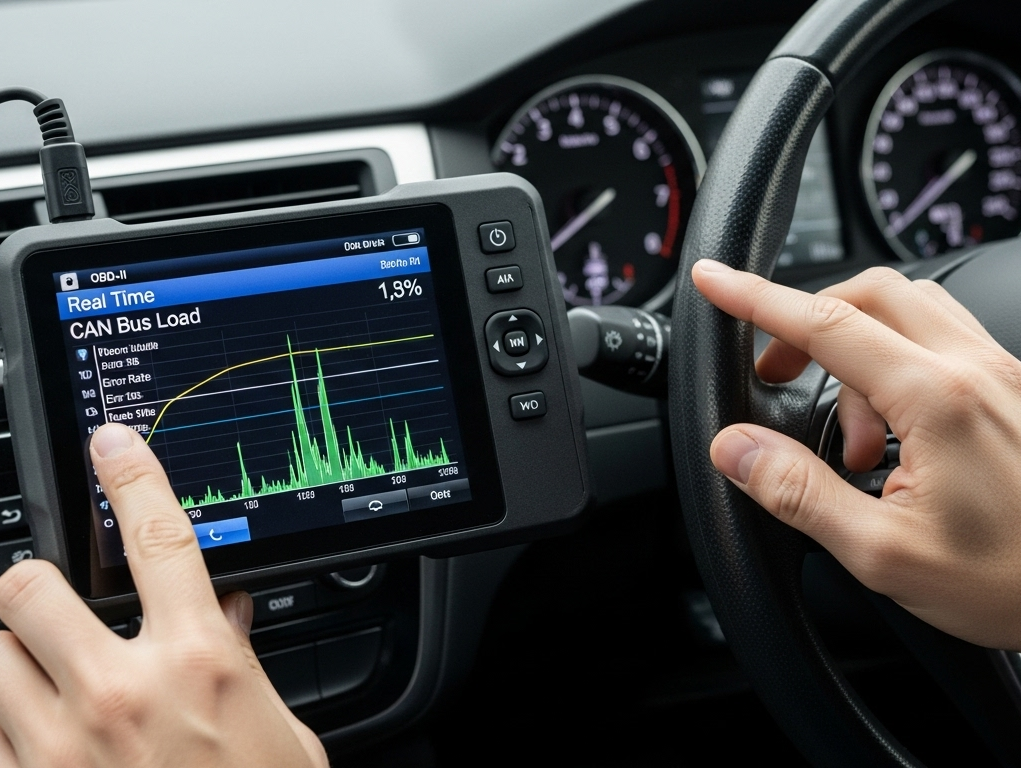
The climbing refinement involving contemporary vehicles requires an entire in-depth perception of diagnostic methods, particularly concerning On-Board Diagnostics II (OBD2) and Tire Pressure Monitoring Units (TPMS). Over Europe, Asia, and the US, these solutions apply using discrete frequencies. OBD2 norms are largely harmonized globally, primarily utilizing ISO 9141-50, KWP2000, CAN, and others, but regional applications can pose minor variations. TPMS, however, is where considerable frequency contrasts emerge. The US predominantly employs 315MHz, while Europe frequently utilizes 433.92MHz, and Asia reveals a more dispersed range including both frequencies and supplementary bands. Hence, exact diagnostic instruments must be furnished with the potential to decode these various frequencies to facilitate effective troubleshooting and maintenance.
Revealing TPMS Sensor Frequencies: A Global Guide (Europe, North America, Asia)
Mastering rubber checking apparatus (TPMS) detector signals throughout the world shows itself as tough. Ordinarily, North regions mainly utilize 315 MHz, while some newer vehicles utilize 433 MHz. Whereas, Europe and most of Asia chiefly work on the 433 MHz frequency, with some jurisdictional variations appearing notably in specific Asian countries. Accordingly, critical to check the legitimate channel preceding acquiring TPMS probes to secure match and avoid imminent concerns.
Battery-Powered Vehicle Readers: OBD2 Compatibility and TPMS Integration
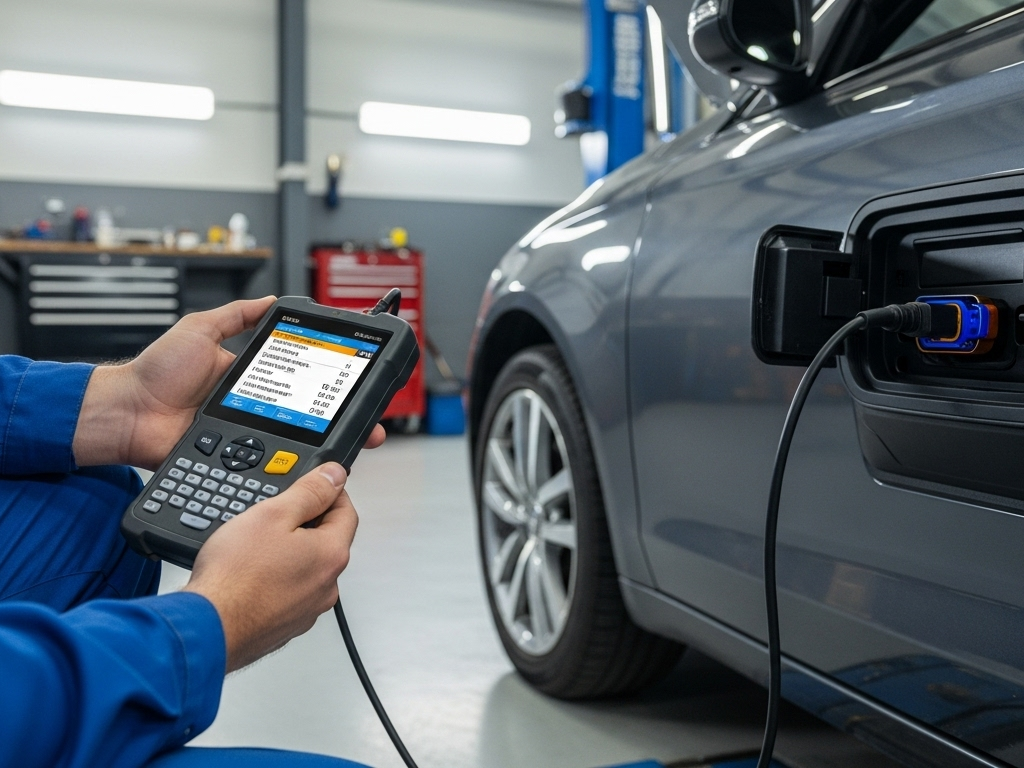
Up-to-date EV ride readers are increasingly integrating essential functionality, principally related to both standard On-Board Diagnostics II (OBD2) compliance and Tire Pressure Monitoring System (TPMS) connectivity. A lot of battery-powered engines utilize OBD2 ports for fetching vital system figures, enabling technicians and holders to pinpoint conceivable faults. Furthermore, flawless TPMS association provides true tire load reports, helping to optimized security and combustion efficiency. This mixture of OBD2 reception and TPMS assistance signifies a major breakthrough in electric automobile evaluation.
TPMS Frequency Contrasts: Eurozone vs. This Region vs. Eastern Asia - A Detailed Examination
Various systems responsible for measuring tire compression—TPMS—operate on special radio wavelengths, leading to considerable regional fluctuations. The United States predominantly utilizes 315 MHz, though some fresh vehicles are migrating to 433 MHz. European Union mandates 433.92 MHz, a particular frequency to preserve alignment across jurisdictions. The East exhibits a diverse landscape, with selected states using 315 MHz, others 433 MHz, and still others employing a combination of both. This variation causes challenges for maintenance hubs and transportation users when dealing with replacement TPMS sensors or diagnostic tools, demanding careful validation of regional criteria to circumvent conflicts and establish proper serviceability of the TPMS.
Auto Scanners for Battery-Powered Autos: Tire Info Evaluation & Signal Analysis
State-of-the-art transport evaluators are consistently enhancing to accept battery-operated motors, mainly pertaining to TPMS evaluation. Unlike combustion-based engines, EVs present distinct challenges when it comes to tire data testing. Many electric cars use diverse tire data devices spectra requiring the reader to correctly interpret the radio wave in use. This feature provides specialists to just view pressure metrics but also detect the definite wave being transmitted by the pressure detection modules, supporting in correct review of failures.
Europe Tire Monitoring Wavelengths: Which Wish to Recognize?
Understanding the world of machine TPMS can be a problem, primarily due to the varying wavelengths utilized across The EU, Asia, and the United States. Continental European vehicles predominantly use 433.92 MHz, while numerous Asian countries employ 315 MHz and 433.92 MHz, creating a intricate situation for specialists. In the US, both 315 MHz and 433.92 MHz are frequently used, with 315 MHz being more frequent. Accordingly, understanding these regional variations is indispensable for accurately addressing TPMS shortcomings and selecting the right programming tools.
Beyond such Fundamentals: Motor Vehicle Scanning, Battery-Powered Motorcars, accompanied by Tire Sensor Network Sensor Wave Observation
Regarding competent automobile experts, merely fathoming a foundations of car scanning, energy-powered auto frameworks, and tire surveillance transmitter signal deciphering represents an decisive next level. The aforementioned themes go throughout initial troubleshooting, involving exclusive gear and understanding so as to rightly diagnose even correct challenging barriers related wheel monitoring, charge network output, in addition to powertrain error indicators. What's more, appropriately isolating pressure detection transmitter frequencies – that are differ across specific brands even trim levels – often necessary for effective pairing.
Battery Car Troubleshooting: Using OBD2 Scanners to Troubleshoot TPMS
Fixing Tire Pressure Monitoring Systems wheel pressure systems in electric vehicles battery vehicles often involves more than only visual inspection. Modern OBD2 diagnostic tools offer the ability to access TPMS data and diagnose potential errors. Utilizing these machines, technicians can assess fault codes, test sensor state, and even perform sensor tests, allowing for prompt diagnosis of pressure sensor defects and minimizing out-of-service duration. These is especially essential given the widespread complexity of EV electronics.
Interpreting Tire Monitoring Bands: A Simple Guide for Continental Europe, Eastern Asia, and United States and Canada
Effectively engaging with wheel pressure devices amongst the EU, Asian Subcontinent, and American Continent necessitates a thorough command of the distinct radio frequencies they operate on. Separate from a unified system, different zones usually observes specific frequency bands. For instance Eurozone largely bases on 3-1-5 MHz frequency and 433.92 MHz frequency, while US and Canada usually applies 3-1-5 MHz frequency nevertheless some updated vehicles have the potential to carry 433 million nine hundred twenty kHz. Asia-Pacific exhibits a more fragmented context, with several ranges deployed, contingent over-the-air verification upon the area and car brand.
- Reflect on area guidelines regarding wireless signal.
- Examine your vehicle's owner's manual for precise band.
- Harness a TPMS scanner equipped for understanding varied broadcasts.