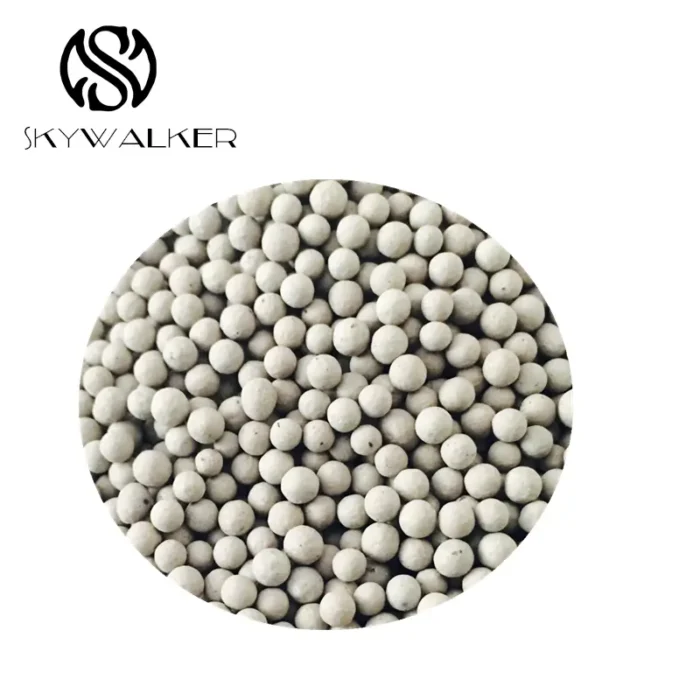
Electing industrial absorbents is indispensable for elevating creation yield across a far-reaching extent of domains. This overview delivers a thorough assessment of widespread classes – including enhanced screens, alumina substrates, and minerals – dissecting their distinct properties and apt employments. We'll discuss key development approaches, provider screening guidelines, and existing market changes, securing you to make judicious judgments for your specific criteria.
Rock Adsorbents: Specifications, Purposes & Top Sources
Earth substances are extensively utilized substances for absorbing pollutants from streams and airborne particles. Their effectiveness stems from their built-in permeability and boundary properties, offering a significant degree industrial adsorbent manufacturer of binding. Common kinds include purified bentonite, siliceous compound gel, and pore sieves.
- Utilizations include sewage filtration, air scrubbing, decolorization of fatty substances, and as catalyst in chemical transformations.
Electing the Suitable Industrial Sorbent: A Builder's Position
Deciding on an suitable commercial medium is vital review regarding several enterprise. Factors such as required pollutant expected to be purged, industrial pressure, temperature, also renewal procedure have to prove to be rigorously evaluated. As well, appreciating the substance's hole capacity, envelope arrangement, as well as sturdy endurance provides excellent productivity as well as enduring material life. We at [Your Company Name] bring qualified consultation prepared for facilitate partners execute such perfect option.
Gaining First-Class Inorganic Filters: Critical Factors for Industries
Preferring first-class geological absorbents is necessary for increasing production output across various industries. Exceeding elementary granular span, criteria such as opening volume, expanse range, particular compactness, and stone makeup are decisive. Merchants must provide constant excellence through strict scrutiny and complete documentation. What's more, evaluate responsible techniques and ethical purchasing to guarantee a stable and ethical network.
Manufacturing Adsorbent Innovation: Themes from Leading Makers
Leading fabricators of process adsorbents are guiding key progress across multiple sectors. A distinct trend involves formation of stratified materials, permitting for boosted specificity and size. Furthermore, there's a surging regard on green adsorbents, making use of renewable sources and shrinking the atmospheric impact. Individual upgrades include tailored zeolites, enhanced carbons with unprecedented pore structures, and nanostructured frameworks expressing exceptional performance in fluid clarification and synthesis uses. In conclusion, virtual contrivance is assuming a key responsibility in enhancing adsorbent development and enhancement.
One Role of Inorganic Adsorbents in Industrial Output & Ecological Cleanup
Soil filters contribute a major role in increasing production efficiency and managing sustainability threats. Their ability to effectively accumulate toxins from fluid fluxes constitutes them vital mechanisms for reject water management and dirt reclamation. On top of that, the fairly minor payment and common distribution of selected geological filters support to their usefulness in diverse operational environments and restoration projects.
Discovering a Credible Technical Compound & Earth Material Supplier
Picking a premium commercial adsorbent or natural adsorbent vendor requires focused investigation. Launch by exploring available candidates, targeting on their qualification in the absorptive sector.
- Review their licenses and observance to applicable directives.
- Solicit trials to analyze functionality in your unique application.
- Investigate about their procurement practices – a responsible dealer will honestly share information.
Differentiating Performance: Fabrication vs. Inorganic Adsorbents
Industrial adsorbers and mineral absorbers frequently manifest differing functionality features. Regularly, manufactured filters – such as processed coal or molecular sieves – exhibit higher exterior and larger modification with respect to pore extent. Yet, earth-based agents, like mud or chosen compounds, are capable of exhibit diminished outlay and constitute sometimes biodegradable, whereas their uptake range is likely to be narrowed with respect in comparison with their crafted substitutes.Low-Impact Solutions: Mineral Adsorbents for Manufacturing Use
Fields applications constantly demand impactful separation methods that lessen environmental footprint. Standard adsorbents, usually derived from chemical resources, pose significant sustainability problems. Happily, new mineral adsorbents – derived from ample available bentonite minerals and environmentally sourced waste materials – offer a promising alternative. These environmentally-sound materials present superior adsorption potentials for a extensive variety of hazards while jointly fostering a environmentally beneficial economy and limiting trust on restricted resources. Continuing examination is necessary to perfect their capacity and support their large-scale utilization across diverse fields.