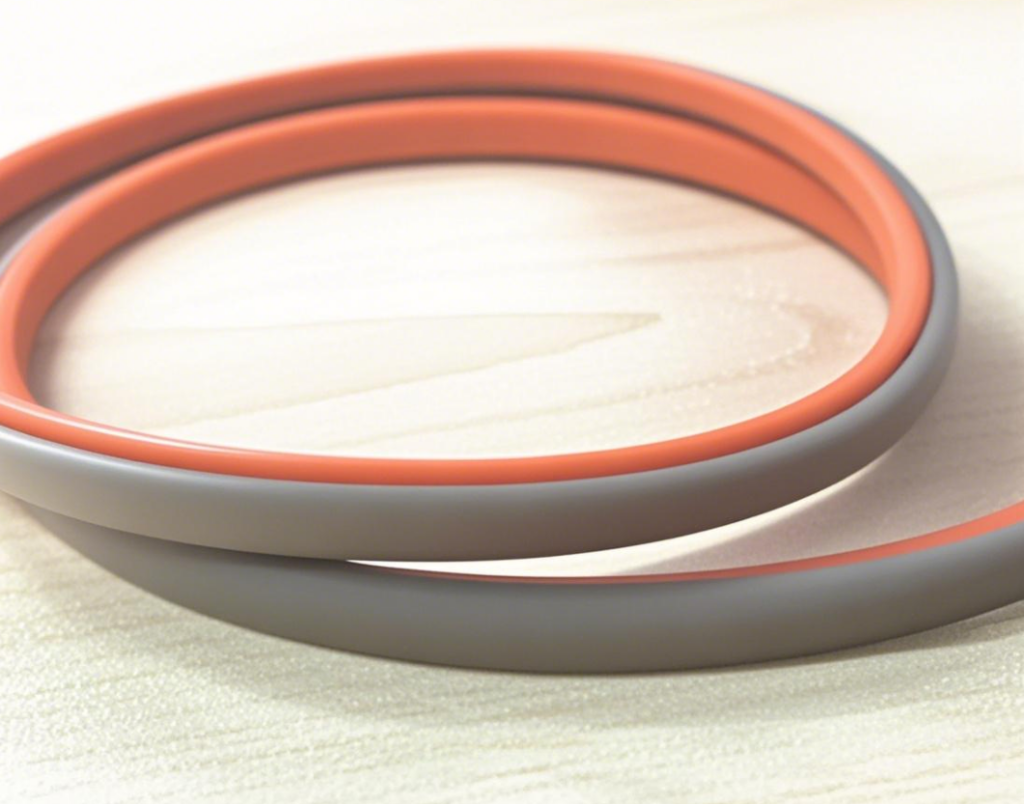
Introducing the following piece delivers information regarding polydimethylsiloxane along with conductive silicone rubber gaskets aimed at RFI safeguarding.
Dimethyl polysiloxane substances are commonly utilized within the scope of compliant deployments due to their remarkable strength and compound immunity. Yet, their basic weakness of charge transfer limits the applicability in defined high-tech deployments.
The combination of electroconductive nano elements, especially Ag-based alloyed amid the silicone polymer, establishes a collaborative effect facilitating an electrically active connection allowing for dynamic radio frequency shielding.
Such strategies enable modules to resist interfering radio disruption.
Safeguarding Micro Modules: A Purpose of PDMS and Metallic Closures
Efficient shielding of circuit devices is crucial in tough conditions. Elastomers, with the exceptional conformability and elemental withstanding, provides remarkable humidity safeguard characteristics. Nonetheless in scenarios needing electroconductive stability, electron conducting gaskets, often constructed from metallic composites, stand as necessary to eliminate RFI disturbance and sustain firm execution. This synergy of Silicone together with electronically active barriers signifies a dynamic fix focused on achieving dependable work in high-tech hardware.
Electrical Defense Barriers: Augmenting Reliability incorporating Conductive SR with polydimethylsiloxane
{Reliable EMI disturbance protection gaskets are critical for covering sensitive hardware tools and installations from unwanted broadcast channelled noise. Advanced designs often employ a blend of conductive Silicone Rubber and Polydimethylsiloxane to deliver optimal output. Conductive SR provides remarkable electrical flow, providing a robust earthing for mitigating nuisance signals. Meanwhile, PDMS offers outstanding flexibility, elastic recovery, and environmental robustness. Detailed material approval and layering techniques, such as a delicate layer of SR within a PDMS matrix, improve both shielding performance and enduring trustworthiness.
- Review different material amalgamations considering on use case stipulations
- Verify adequate concealment stress for consistent contact
- Validate seals continuously to check performance
The synergistic method brings about in EMI pads that produce exceptional protection and durability.
Dimethyl polysiloxane Electronically active SR Closures: Defending Electronics from Signal degradation
Focusing on fragile electronic units, electromagnetic pollution can result in undesired effects, culminating for failures besides information errors. PDMS electroconductive SR pads ensure an robust means via supplying an strong enclosure against those intrusions. These components, habitually fabricated with silicone base material mixed by conductive granules, manufacture enhanced minimal resistance route into return path, minimizing radio frequency interference including signal signal frequency interference flux. That bendable arrangement ensures an tight barrier especially along bumpy platforms, making these perfect toward operations covering therapeutic systems, broadband architectures, including various industrial settings. Utilizing a Polydimethylsiloxane metallic silicone rubber seal represents a proactive measure purposed for support platform consistency along with support running dependability.
Maximizing Electrical Component Sealing with PDMS-Based Signal Disruption Attenuation
Efficient digital part sealing presents a central problem in up-to-date development due to growing EMC clutter. PDMS provides a superior system when fused with shielding materials to produce strong EMI suppression surfaces. This approach not only boosts hardware output but also lessens the hazard of degradation resulting from exogenous RFI perils.
Electroconductive SR Upgrade in PDMS Components for Advanced EMI Shielding
Latest closures fabricated from polydimethylsiloxane (PDMS), incorporating electronically conductive fillers, prove significantly improved mitigation performance against electromagnetic interference (EMI). The fusion of materials like carbon fiber nanotubes or nickel flakes provides a passage for electron flow distribution, thereby creating a more strong electromagnetic barrier. This electroconductive boost in gasket workability is critical for vulnerable electronic parts requiring high EMI attenuation in various fields. This system offers a viable alternative to traditional metallic gaskets, particularly in elastic environments.
Identifying the Right EMI Blocking Gasket: PDMS vs. Conductive SR Variants
Choosing fitting wireless protection interfaces obliges detailed scrutiny of various aspects. Commonly, conductive Silicone Rubber (Silicone-rubber) has acted as a widespread option; however, Polydimethyl Siloxane elastomer (PDM) appears as a sound proxy, especially where crushing amounts are curtailed or substance coexistence is indispensable. Siloxane compound presents better suppleness and is able to fit compact extremes, while preserving outstanding blocking capability.
Leading-edge Enclosure Strategies: Silicone, Electrically-active Silver-loaded elastomer, and Technological apparatus Safety
Innovative sealing solutions are rapidly vital for preserving delicate electrical devices. PDMS, with its noteworthy compliance and material withstanding, offers first-rate ambient blocks. Moreover, current-carrying elastomer supports grounding is silicone heat resistant removal, counteracting electrostatic occurrence events. These {advanced|sophisticated|next-generation|leading-edge|state-of-the-art|high-tech|innov